I’m visiting my parents this weekend and will have to post an article this coming week. Just finished practicing with my dad. He’s singing “Finally Home” tomorrow for a special. Now I need to practice something for offertory.
I think I’ll play a simple arrangement of a hymn since I’ve not had time to practice 🙂 I pray everyone has great Sunday services tomorrow.
Since believing on Jesus Christ at the age of 29…I can truly say: “Blessed Assurance Jesus is Mine”. This became one of my favorite hymns after becoming a Christian.
Shortly after being saved I arranged an offertory that included: “Blessed Assurance, Saved by the Blood and Since Jesus Came Into My Heart”. I will have to write it out in my (ha ha) spare time.
This free sacred piano arrangement of “Blessed Assurance” is a result of preparing several of our own soon-to-be church pianists to play for congregational singing. We now have a rotational schedule for our intermediate to advanced pianists to allow them to play for our congregational singing. It’s exciting to see them gain experience to better equip them for serving the Lord.
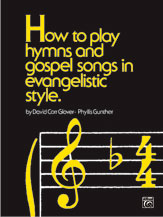
Just discovered a practical instructional book on improvising hymns found on Alfred Publishing’s site.
This book is a great starter for the intermediate pianist who wants to improvise from the church hymnal. The pianist will learn how to do the following:
*Add tenor to the right hand
*Double the bass note
*A couple of easy-to-learn left hand fill-in ideas
*PLUS…a collection of hymns already arranged for the intermediate church pianist using the improvising ideas that are taught in the book.
Click on the following book title to view the book and sample pages!
The following short video tutorial on improvising hymns is geared to the beginning church pianist. Playing straight from the church hymnal can sound rather plain. Learning how to dress up the hymns adds a new dimension of sound! This lesson gives some simple left hand fill in ideas for the first line of “When I Survey the Wondrous Cross”.
Special clarification about the theory rule mentioned in this lesson concerning omitting the 3rd of the chord…The 3rd can be omitted from either hand. Wait until you see the video below to understand this explanation 🙂
The next video tutorial will reveal more improvising ideas for “When I Survey the Wondrous Cross”.
The hymn “Count Your Blessings” carries a great message in song but contains frequent repetitive notes providing a rather plain accompaniment for the average church pianist
Free Improvising Ideas for Count Your Blessings (congregational style)
Key of D Major
1. Use alternate bass movement (see measure #2) LH beat one…I played an ‘A’ rather than ‘D’
2. Measure #1 and #5, beat one ( no need to play every word) when playing congregational style; allows more ease of movement for the pianist.
3. The four note RH chords provide support to the singers.
4. Measure #6, notice the contrary octave movement between the hands for variety.
*Contrary movement between both hands always adds a nice touch of spice 🙂
As I’ve mentioned before…the church pianist can deviate from the melody as long as the congregation knows the song real well. You’ll notice the “missing melody” here and there in the free congregational piano arrangement of “All Hail the Power”. The audio contains the piano accompaniment and the melody line.
We like to change keys to add extra life to the congregational singing 🙂 The key change in this arrangement does add an extra measure so it would require a quick practice with pianist and song leader before trying it with the congregation.
Most of the key changes we use in congregational singing move right into the last verse without hesitation.
Church Pianist Tip:
*This free congregational piano arrangement may also be used to accompany a trumpet solo.
I was able to finish page two of “All Hail the Power” tonight even after a busy but good week of revival at our church. I will try to share some music highlights of our week sometime soon.
In my next article…I ‘ll share editor notes along with an audio of this free piano arrangement for “All Hail the Power” congregational accompaniment.
I enjoy playing and singing “All Hail the Power”. The church pianist must add lots of fullness to this majestic hymn to portray the mood of the text.
Just picture it…God is on His throne and scores of angels are bowed down before Him. A huge choir is singing “All hail the power of Jesus’ name! Let angels prostrate fall…”
I think the words as I play this wonderful hymn. The melody and text are a great match!