I’m feverishly trying to finish my early intermediate sacred piano solo book for Lorenz. It’s due June 1st. I’m working on the ninth one now. The book will contain a total of ten piano solos.
Here are some of the song titles: What a Friend We Have in Jesus, His Eye is on the Sparrow, Jesus What a Friend for Sinners, All the Way My Savior Leads Me and Crown Him with Many Crowns.
I’m also currently working on my next website video tutorial to present a certain fill-in that I LOVE to use!
In my spare time….I need to unveil a nice patriotic vocal solo by my Dad….hope to publish asap!
Need your help! Just need names of at least two hymns that use a 12/8 time signature. Thanks!
Tune in at the link above tomorrow evening at 8pm EST… to be a part of a live facebook session for church pianists all over the world! (even as far as the Cayman Islands) 🙂
Click below to print free downloads for tomorrow’s session:
There may be one more sheet to download by tomorrow morning. Bring notebook paper to jot down the numerous tips you will hear sprinkled throughout this session! You’ll also want a pencil to use on the download sheets.
Most of the editing was the result of a private lesson with Marty Parks. Very thankful for his input! He shared a great pointer on how to better communicate rhythmic interpretation in written music.
(Thanks to Robert Sterling and Brad Nix for pointing out the 9 over the tuplets for clarity). I just honestly had shied away from learning how to input tuplets with Finale and FINALLY learned how! 🙂 Thanks to Joseph Martin for his overall encouragement and teaching spirit 🙂 Also, thanks to John Parker for his written comments on the arrangement!
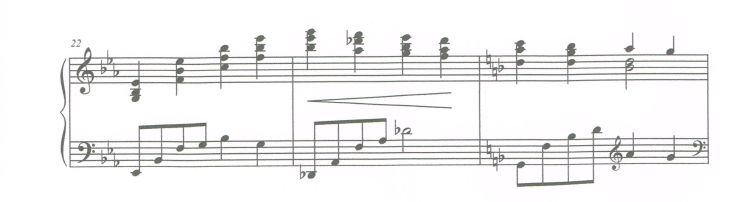
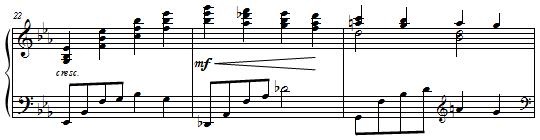
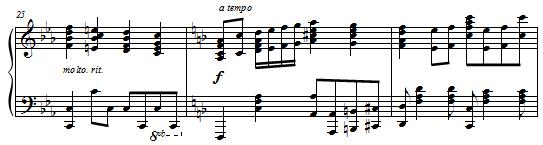
For example, instead of a breath mark (large looking comma)…just insert a rest…makes a clearer statement. Also, NOT to show key change too early which is what I ALWAYS do! 😉 *See key change illustrations below the video.
Due to requests for the critiqued version…there are now two different arrangements of Abide With Me in our music store…the advanced original version & Critiqued version. Those who like a challenge will enjoy playing the critiqued version….which contains minor editing changes…ending with a run up the keyboard. Listen to the critiqued version below…
Now to show you the original and new key change correction 🙂
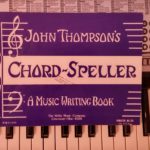
I have a chord speller book by John Thompson that I use to teach my church pianist students who need to brush up on theory.
This book provides foundational information needed for the church pianist to effectively improvise.
Short synopsis of book:
John Thompson’s Chord-Speller
The purpose of this book is to present the Triads (including the Dominant and Diminished Seventh Chords) in a way that will enable the student to read them, write them and recognize them by sight or sound.
Having a working knowledge of scale and chord structure will help the church pianist with improvising hymns.
If you’re interested in seeing sample pages or purchasing the book…just click on the image of the book above.
I’m always looking for simple-approach type books and this one fits the bill! (I don’t get paid to sell this book) 🙂
This book has been around for awhile so you may find it on Ebay or Amazon.
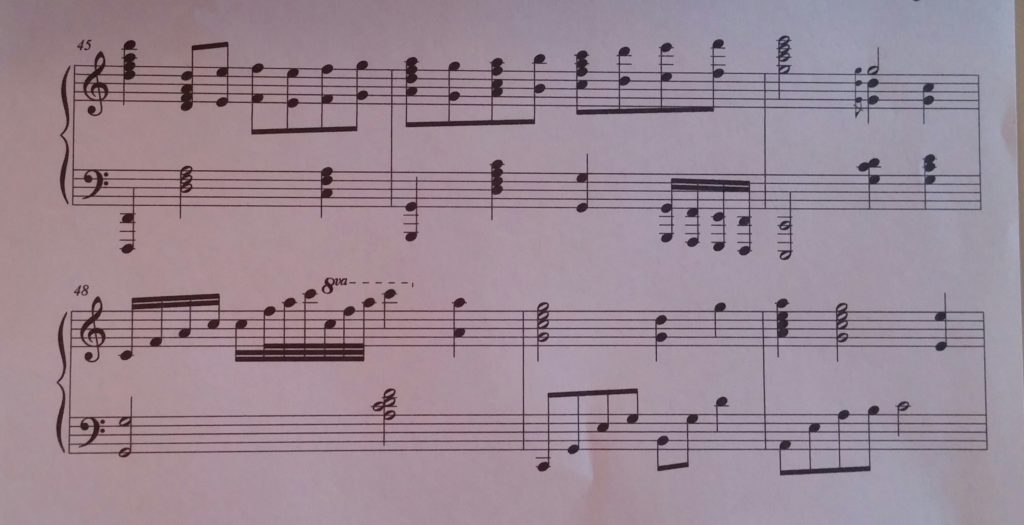
The following excerpt was taken from my Easter arrangement “Were You There” (to be published sometime in Feb. 2017)
Many have asked how I play runs so fast and smooth.
My answer: fingering and body movement are important factors in creating a smooth and fast run.
Keep hands close to keys…wrist level with hands. Allow hands to follow shape of the note groups….turning thumb ahead of time to make smooth transition into next group of notes. (The thumb starts each group.) The body…waist up… should also follow the run….bend slightly at the waist to the right… and lean toward keys a little for full body support.
Use fingering that follows the natural shape of the run…allowing for ease of movement throughout the run. ( suggested fingering for right hand run at measure 48… 1-2-3-5)
Notice the loose wrist and arm movement as I cross into each group. ( I prefer to play 4 groups of this run instead of 3 but trying to be reasonable 😉
The following video samples begin at measure 47 (first time…fast….second time…slow)
I’ve provided the recent “broadcast” from facebook. *See written article below for essential information that goes with the video.
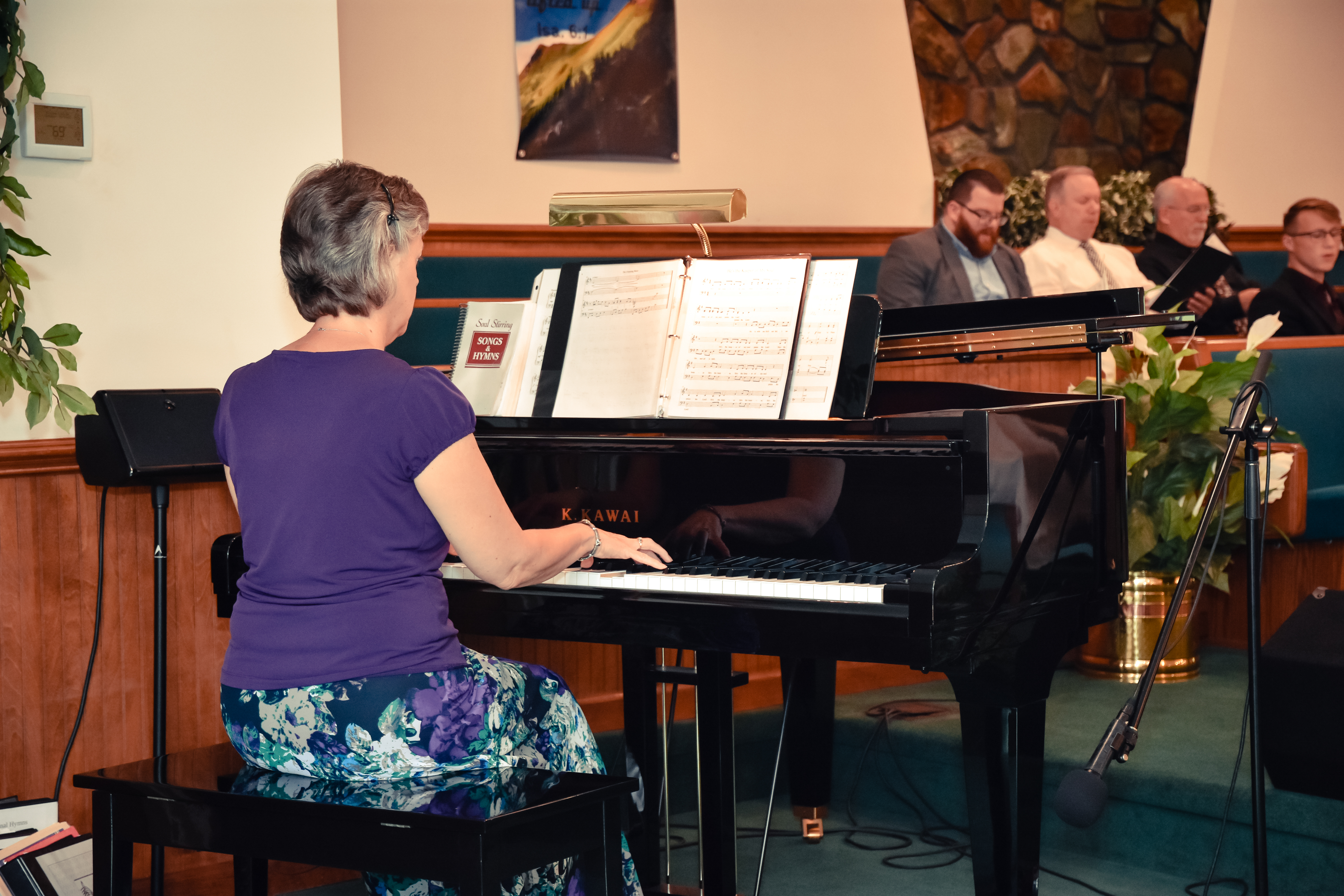
On a lighter note….”Don’t you just LOVE my piano?! It’s one of a kind…..treble is at the bottom…bass at the top! (Just kidding) *The dilemma was a front facing camera.
Jenifer Cook is going live on Facebook this Thursday at 8 pm EST. (November 10, 2016)
Ever notice how a lot of Christmas hymns have frequent
accidentals…the makings for awkward hand movements…
Hear Jenifer’s suggestions in dealing with accidental passages. She’ll be showing her note changes on the handouts listed below…feel free to either print them or have them on a screen for viewing purposes for tonight’s session. So much to share in a short time span!!
Copy and paste this link in the URL field at the top of your browser page: https://www.facebook.com/Jenifer-Cook-602815303135832/?fref=ts
Print the following FREE music example pages for tonight’s “going live on facebook” session with Jenifer
I recently published fill-in ideas for The Old Rugged Cross.
One of my readers asked me today if I could include the fill-ins on the printed hymnal version for ease of use.
I had to cut and paste and resize the fill-ins to fit the printed copy of the hymnal version so it’s kind of rough looking but it’s the best I could do with time allowed in my schedule.
Thanks for the suggestion Becky! 🙂
Click on following titles to download your free copies of the following: