I’ll be posting a free piano arrangement of “Like a River Glorious” sometime this week. This free arrangement will be written in a prelude/congregational style for the church pianist.
“Like a River Glorious” is a beautiful hymn….speaking of God’s wonderful, everlasting peace that He gives to those who have trusted in Him.
To start with…I will show you a page of hymn arrangement samples containing scales. Scales are used to embellish a melody or simply as a fill-in. In the following examples…both functions are utlizied.
Count Your Blessings (the opening scale is added as extra filler to an introduction)
Jesus Loves Me(the scale creates a nice dress-up for the melody)
Let the Lower Lights Be Burning(this scale creates a nice filler on the syllable “more” and blends into the next two words “But to”)
Editor Notes for final page “Practical Scale Exercises”
When trying to master technical passages in hymn arrangements…I will isolate the passage and master it. Sometimes I create or embellish upon the passage making it more fun to practice. Hope the following scale exercises will stimulate other church pianist’s creativity.
I hope the previous articles on scales in hymns has been a help to many church pianists. Scales add so much life to hymns, don’t they?
Tomorrow’s final article on scales will feature some different ways to play scales…preparing the church pianist for real-life application of scales to hymns. You may find it interesting to know where I get my ideas for scale drills. :)
This free piano hymn arrangement of “I Feel Like Travelling On” is geared for the beginning church pianist at an early elementary level.
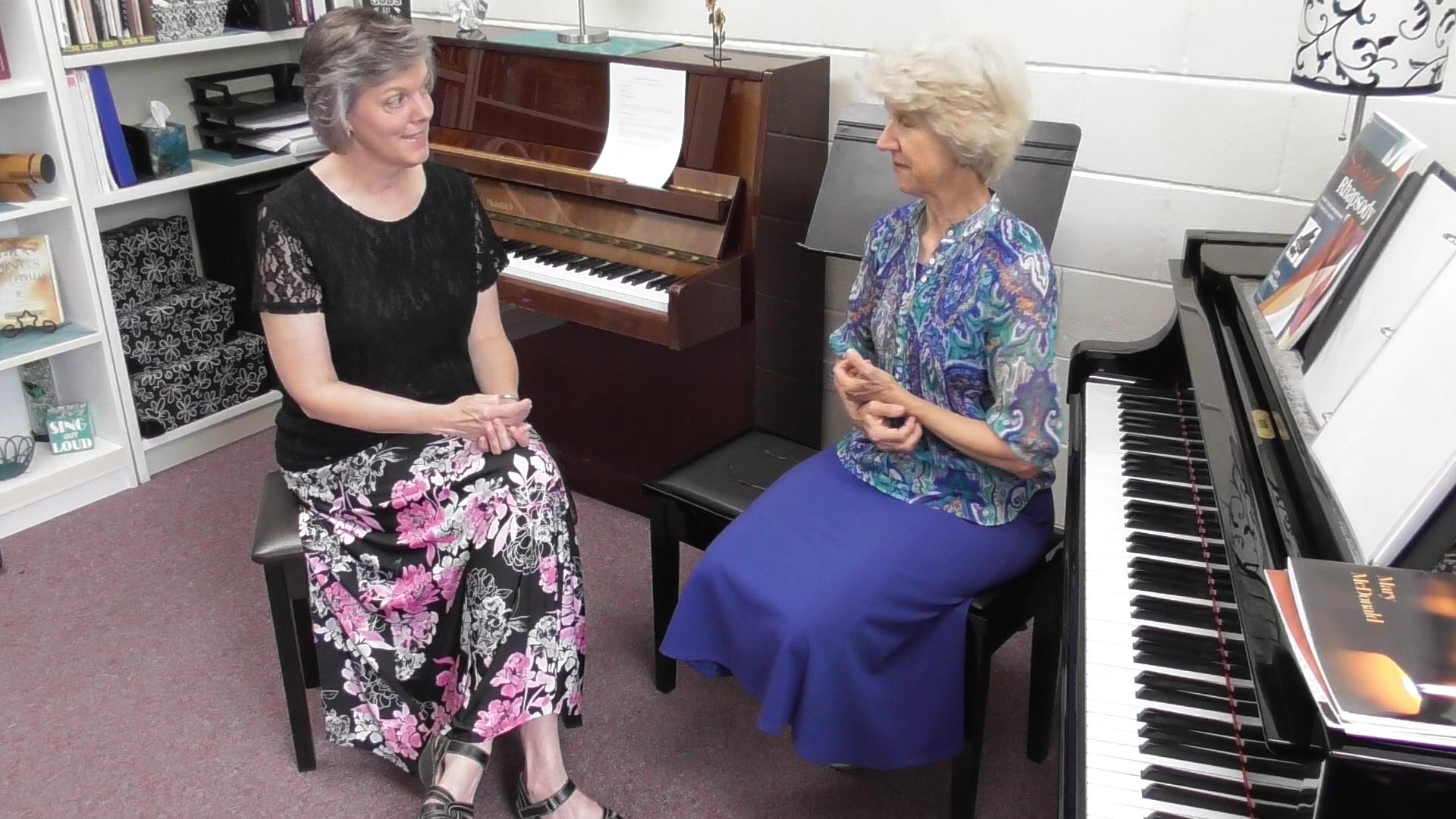
My piano student featured in this video, is a church pianist who plays by ear but is learning to read music. She’s doing quite well! I’m writing arrangements with her level in mind.
Maybe some of you church pianists can share this with your students or use this free piano hymn arrangement for yourself.
I plan to post part three of scales in hymns by the end of this week.
Some church pianists may not understand where to insert a scale in a hymn.
Scales can be placed in several different places in a hymn. The upcoming article will show the church pianist how to add a scale to the very first measure of a hymn!
Believe it or not…scales are very important to the church pianist!
I had fun taking pictures of scales in different hymn arrangements that I”ve played over the years. Browse through the following pictures of scales and then I’ll give you pointers on where to insert complete or partial scales in your own hymn improvising.
Click on the following titles to see examples of scale passages in hymn arrangements:
1. End of a phrase or held word elsewhere (Wonderful Peace, A Child of the King, Count Your Blessings) *Notice how these runs cover the held word plus glide through the next word without really playing the true note…it’s just kind of understood.
2. To dress up the melody (There is a Fountain)
3. Key changes (Blessed Assurance) adds zest!
Application!
Now…it’s time for you as a church pianist to try inserting scales into your hymn playing. It works best to add scales to your solo offertories or when accompanying a vocalist or instrumentalist. Why? Because the tempo is more flexible when working as a soloist or when accompanying another soloist.
Start with a slow hymn; allowing you time to work a scale in at a comfortable speed.
The hymn entitled “The Old Rugged Cross” has stood the test of time. As a church pianist, I enjoy reading the stories behind the hymns. Knowing the story behind the hymn enriches the meaning…making the hymn even more personal to me.
God used George Bennard, an evangelist of the early 1900′s to write this soul-stirring hymn.
The melody of “The Old Rugged Cross” came quite easy to George. He tried to think of words but they didn’t flow until several months later. George had been preaching a series of evangelistic meetings on “the cross”. Many people came forward to be saved during those meetings.
George was thrilled with the number of souls that were saved during those meetings. He reflected on how the message of the cross was so important!
He went home after the meetings and the words to “The Old Rugged Cross” flowed from his pen as he wrote the words to a hymn we all love and cherish.
The full story to this beautiful hymn can be found in Al Smith’s Hymn Histories. Al Smith met George Bennard many years ago and heard the firsthand account of how George wrote “The Old Rugged Cross”.
I just came across another excellent article written about George Bennard. Hope you enjoy it as well as I did.
As a church pianist, I encourage other pianists to read the stories behind the hymns that they play. It will instill a deeper appreciation of the great hymns of faith.
Easter is just around the corner and church pianists are looking for Easter arrangements or already practicing one. I thought I’d post my free piano arrangement of “My Saviour’s Love”.
I know many church pianists already use chord substitutions but some of you may not be sure what chords fit where.
Today, I was trying to show one of my hymnplaying students several chord substitutions for the last line of “Just As I Am”. We were short on time…so I had her video me playing the chord substitutions so I could just email it to her. The thought occured to me…maybe others could benefit from this very brief video demonstration of chord substitutions.
You may have to pause here and there to get a glimpse of the chord substitutions.
Editor notes for today’s quick video…
Scenario: When the same chord lasts for an entire measure…it’s time to try a chord substitution for a more interesting sound.
For example…the last line of “Just As I Am”…
“And that Thou bidst me…” uses a C chord
Chord substitution used: G minor 7th to a C 7
Next few words…
“…come to Thee O…” uses a F chord
Chord substitutions used: F , d minor, G7
Next words…
“…Lamb of God, I come!” uses a C to G chord
Chord substitutions: a minor 7 on “God” d minor 7 for ”come”
Church pianists can revolutionize the sound of their hymnplaying just by adding chord substitutions!
Now…for a quickie video, demonstrating these chord substitutions…